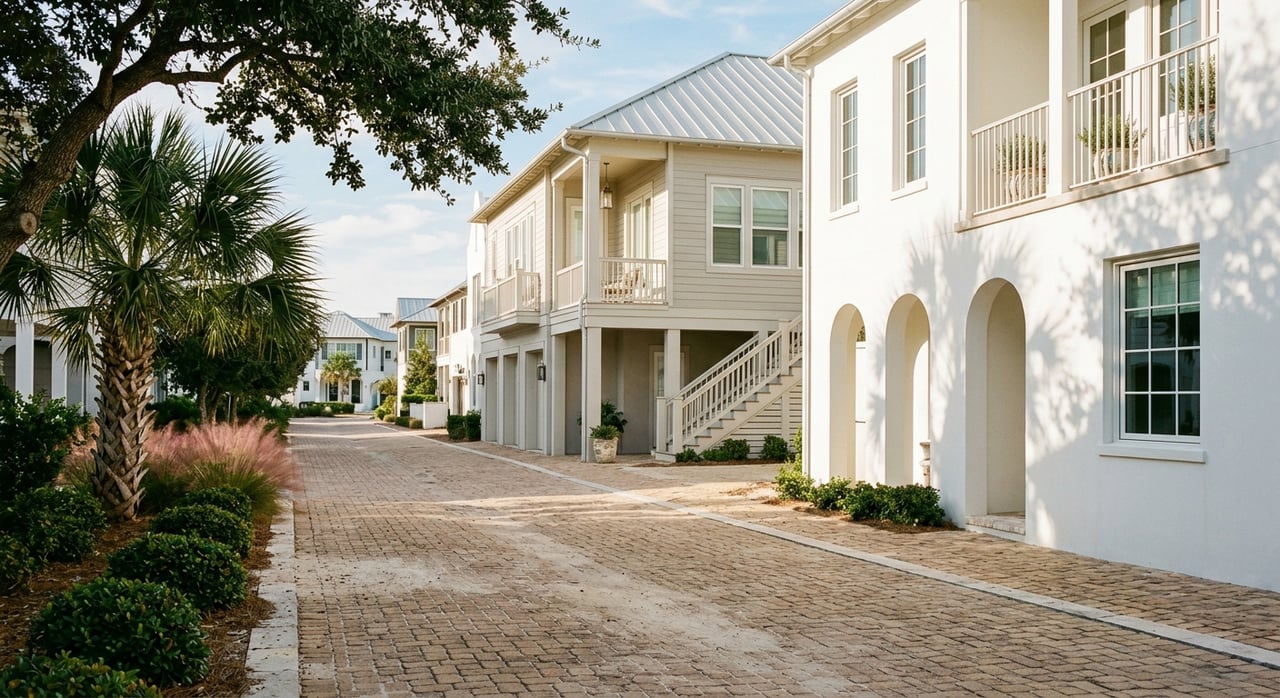
Ever wonder if you can actually enjoy Rosemary Beach without constantly getting in and out of the car? If you are dreaming about a 30A getaway, second home, or lifestyle move, that question matters more than most listing photos can show. The good news is that Rosemary Beach was designed to make walking and biking part of everyday life, while still fitting into the broader 30A area where driving remains part of the picture. Let’s take a closer look at what car-light living in Rosemary Beach really means.
Car-light, not car-free
The most accurate way to think about Rosemary Beach is car-light rather than car-free. Within the community itself, the layout supports a lifestyle centered on walking, biking, and short trips between daily destinations. At the same time, Rosemary Beach sits along County Highway 30A, part of a larger coastal corridor where people still get around by car, bicycle, or on foot.
That distinction matters if you are considering buying or spending more time here. You may park the car and leave it for much of the weekend, but you will likely still use it for certain trips beyond the neighborhood. In practical terms, Rosemary Beach gives you a highly walkable home base inside a broader beach area that still includes driving.
Rosemary Beach was built for walking
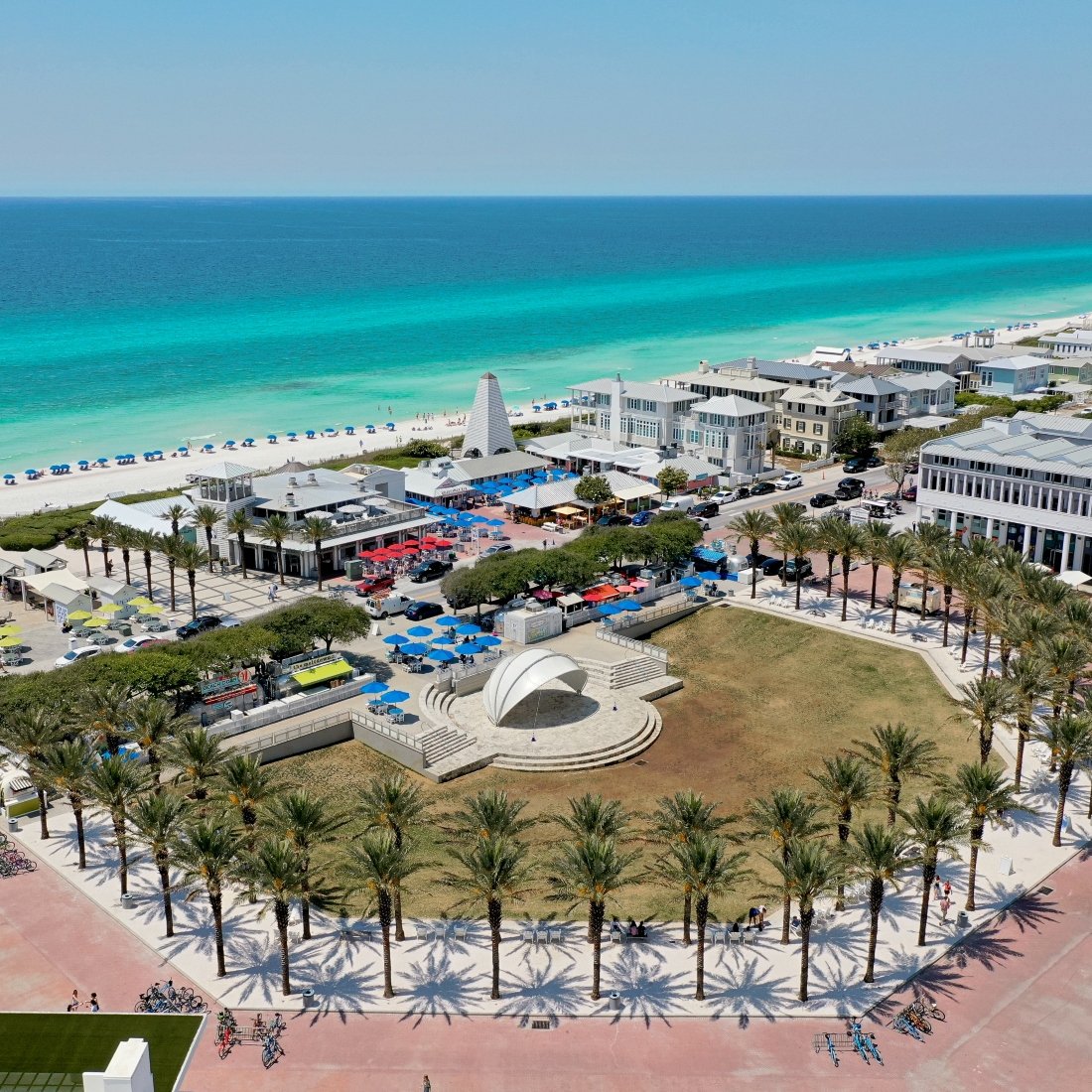
One reason Rosemary Beach feels different from many beach communities is that it was planned around a pedestrian-first design. Community materials describe the town as being founded on New Urbanism, with pedestrian lanes, boardwalks, and hidden pathways woven throughout the neighborhood. Cars are restricted to alleyways behind homes, which helps keep the main experience focused on people rather than traffic.
That planning choice changes how the town feels the moment you arrive. Instead of homes opening mainly toward standard streets and driveways, many open toward public spaces, paths, and boardwalks. The result is a compact environment where moving around on foot feels intuitive.
The community also notes that any point to any destination is about a five-minute walk. While that is a broad community description rather than a personal guarantee for every route, it helps explain why so many visitors and owners describe the town as easy to navigate without relying on a car.
Town Center makes daily routines simple
For a car-light lifestyle to work, your everyday needs have to be close by. In Rosemary Beach, the Town Center is the heart of that experience. Official community information describes it as the place where meandering paths, boardwalks, and cobblestone streets connect to the Town Hall, Post Office, green spaces, restaurants, shops, and businesses.
This is where much of daily life naturally happens. Merchant listings and community materials show a dense mix of coffee spots, dining options, retail, services, and boutique lodging gathered within a small footprint. The shopping FAQ notes that there are about 40 high-end stores spread across North Barrett Square, South Barrett Square, Town Hall Road, and Main Street.
For you, that density is what makes the lifestyle realistic rather than theoretical. Morning coffee, lunch, dinner, browsing, and small errands can often happen in a single walk instead of several short drives.
What you can reach on foot
A walk through the Town Center can connect you to a range of everyday stops, including:
- Coffee shops like 3rd Cup Coffee and Amavida Coffee & Tea
- Dining options such as Cowgirl Kitchen, Summer Kitchen Café, La Crema Tapas & Chocolate, Restaurant Paradis, Edward’s Fine Food & Wine, Gallion’s, and Havana Beach Bar & Grill
- Retail and service stops including Rosemary Beach Trading Company, The Hidden Lantern Bookstore, The Sugar Shak, Tracery, Bamboo Bicycle Company, a bank, and a spa
If you are the kind of buyer who values convenience with character, this setup is a major part of Rosemary Beach’s appeal. It supports a day that feels relaxed and connected, not built around parking lots and backtracking.
The beach is part of the daily rhythm
In many coastal communities, going to the beach means packing the car, finding parking, and planning around the logistics. Rosemary Beach offers a different pattern. Official community materials say there are nine dune walkovers for beach access, with showers at each walkover and two wheelchair-accessible walkovers that include restrooms.
That kind of access changes the texture of the day. Instead of treating the beach like a full outing that starts with the car, you can think of it more like a natural extension of the neighborhood. A beach visit can fit between coffee, pool time, lunch, or an evening stroll.
The community also notes that beach service can provide chairs, umbrellas, tables, watercraft rentals, sunset setups, bonfires, and coolers. For second-home buyers and vacation property shoppers, that level of support helps make the lifestyle feel easier and more turnkey.
Pools, fitness, and recreation stay close
A car-light lifestyle works best when recreation is close to home, not scattered across town. Rosemary Beach has several amenities within its compact footprint, which helps keep your day local and easy to manage. Community information places the Barbados Pool on the west side south of 30A, the Cabana Pool in the center, and the Coquina Pool near the Eastern Green and the Gulf.
The fitness center is located at 9 East Water Street, just west of the Sky Pool. The racquet club includes eight Har-Tru clay courts. These details matter because they show that many common leisure activities can happen within the same walkable environment.
The neighborhood also includes a 2.3-mile fitness trail that uses sand paths and boardwalks and features four fitness stations. Add in bike-friendly sidewalks and a local bike shop, and you have a community where movement itself becomes part of the lifestyle.
What a low-car day can look like
A realistic Rosemary Beach day might look something like this:
- Walk to coffee in the morning
- Head to the beach by dune walkover
- Return for lunch in Town Center
- Spend the afternoon at a pool or fitness center
- Bike or walk to dinner
- End the evening with a stroll through the greens or a town event
That rhythm is a big part of the community’s charm. It is less about checking destinations off a map and more about enjoying how naturally one place flows into the next.
Events help the lifestyle feel complete
Walkability becomes more meaningful when it connects you to community life, not just conveniences. Rosemary Beach hosts a year-round Sunday 30A Farmers’ Market along with Chapel at the Beach services, summer concerts, children’s events, and moonlight-and-movies programming. Community materials also note that green spaces host block parties and movie nights.
Because many of these events take place in the Town Center or nearby green spaces, they fit naturally into the same car-light pattern. You are not just walking to dinner or the beach. You are also walking to the moments that make a place feel lively and memorable.
For second-home buyers especially, this can be an important part of the value. A neighborhood that supports simple, repeatable routines often feels easier to enjoy for long weekends, extended stays, and family visits.
Where a car still comes in handy
It is important to keep expectations realistic. Rosemary Beach can support a weekend or stay where one parked car covers most needs, but the broader 30A area is not built as a completely car-free environment. If you want to explore beyond the community, visit nearby beach accesses, or head farther along the corridor, driving may still be part of the plan.
Visit Florida notes that Rosemary Beach beach access is limited to residents and guests, while Camp Helen State Park is minutes away and Inlet Beach Regional Access is about a mile away. That reinforces the idea that Rosemary Beach works best as a compact, highly walkable private beach town within a larger coastal area where cars still play a role.
For many buyers, that is actually the sweet spot. You get the ease of a pedestrian-first neighborhood without giving up access to the rest of 30A when you want it.
Why this matters for buyers
If you are shopping for a home in Rosemary Beach, car-light living is not just a lifestyle perk. It can shape how you use the property, how guests experience it, and how the neighborhood feels over time. A home in a compact, pedestrian-oriented setting may support the kind of easy coastal routine that many buyers want but do not always find.
That can be especially appealing if you are looking for a second home or a low-friction getaway. Being able to park, unpack, and spend most of your time walking to coffee, dining, beach access, pools, and events is a meaningful part of the ownership experience.
It can also matter if you are evaluating a property as a vacation home or short-term rental investment. While every property decision deserves careful, location-specific review, neighborhoods that make it easy for guests to enjoy the area on foot often stand out for lifestyle appeal.
Why local guidance matters
On paper, many coastal communities can sound similar. In real life, the difference often comes down to how the neighborhood functions day to day. Rosemary Beach stands out because the pedestrian-first design is not just a marketing idea. It is reflected in the layout, the beach access pattern, the placement of amenities, and the way Town Center anchors daily life.
That is where local insight becomes valuable. Understanding how owners and guests actually move through the neighborhood can help you match the right property to the lifestyle you want, whether you are focused on second-home enjoyment, easy lock-and-leave ownership, or a rental-friendly setup.
If you want help exploring Rosemary Beach and the broader 30A market with that level of neighborhood detail, connect with Emerald Coast Signature Collection. Their local, lifestyle-first guidance can help you find the right fit for how you want to live on the coast.
FAQs
Is Rosemary Beach a car-free community?
- No. Rosemary Beach is better described as a car-light community. The neighborhood is designed for walking and biking, but the broader 30A corridor still includes trips where a car may be useful.
Can you walk to restaurants and shops in Rosemary Beach?
- Yes. The Town Center includes a compact mix of restaurants, coffee shops, retail, and services connected by paths, boardwalks, and streets designed for pedestrians.
How close is the beach in Rosemary Beach?
- Official community materials say there are nine dune walkovers for beach access, with showers at each walkover and two wheelchair-accessible walkovers that include restrooms.
What amenities support car-light living in Rosemary Beach?
- Key amenities include the Town Center, multiple pools, a fitness center, a 2.3-mile fitness trail, bike-friendly sidewalks, beach walkovers, and community events in green spaces.
Is Rosemary Beach a good fit for a walkable second-home lifestyle?
- For many buyers, yes. Rosemary Beach’s compact layout, pedestrian-first design, and close access to dining, recreation, and beach amenities support an easy, low-car coastal routine.