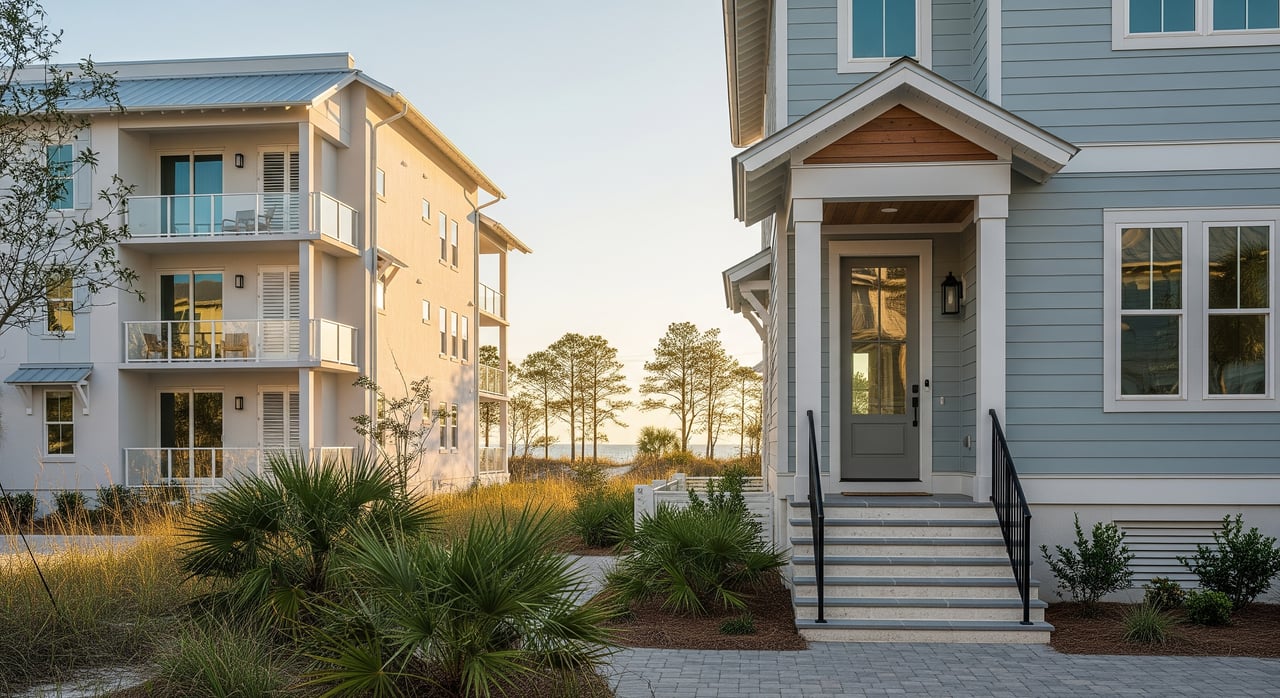
Are you torn between a condo and a townhome for your 30A West investment? You want strong rental demand, predictable costs, and a property that is easy to own from afar. The right choice comes down to how each option works in coastal Walton County, from HOA rules and insurance to financing and short-term rental potential. In this guide, you will learn the Florida-specific differences, the cost drivers that matter, rental realities on 30A West, and a clear due-diligence checklist so you can buy with confidence. Let’s dive in.
Market context for 30A West investors
30A West sits in Walton County on Northwest Florida’s Gulf Coast. It is a high-demand vacation market where buyers often pay premiums for proximity to beach access and community amenities. Demand is seasonal, with peak occupancy in summer and during holidays, and softer off-season months.
You should factor in coastal realities that influence returns and operating costs. Hurricane and wind exposure, flood risk, and insurance availability can affect your bottom line and your lender’s requirements. For performance benchmarking and comps, rely on local MLS data, county property records, and short-term rental analytics from experienced local managers.
Ownership basics: condo vs townhome in Florida
Condominiums under Chapter 718
A Florida condominium typically gives you ownership of the interior of your unit plus an undivided share of the common elements. The association manages the building exterior and shared systems according to Florida Statutes Chapter 718. Owners usually carry an HO-6 policy for interior finishes and contents, while the association maintains a master policy for the building and common areas.
Condo associations follow specific statutory governance, reserve requirements, and disclosure rules. Because major building components are handled at the association level, inadequate reserves can lead to special assessments for capital projects like roof replacements or exterior repairs.
Townhomes and HOAs under Chapter 720
A townhome is often a fee-simple home within a homeowners’ association governed by Florida Statutes Chapter 720, unless the development was legally created as a condominium. You may own the land under your unit and the building exterior itself. The recorded declaration sets who is responsible for roofs, exteriors, and landscaping, and what the HOA dues fund.
Townhomes often resemble single-family homes for insurance and lending. You will likely carry a policy that covers the structure and contents, but always confirm duties and coverage in the recorded documents and the association’s insurance summary.
Why this distinction matters to you
- Insurance: Condos rely on a master policy for the structure, with owners insuring interiors. Townhome owners commonly insure the full dwelling. Coverage details vary, so verify whether the master policy is bare walls-in or all-in and where exclusions apply.
- Maintenance risk: Condos concentrate exterior upkeep and major systems at the association level, which can mean higher dues and the possibility of special assessments. Townhomes may shift more day-to-day exterior responsibility to you, but dues can be lower depending on what the HOA maintains.
- Financing: Condos face project-level lender reviews that check reserves, litigation, and owner-occupancy ratios. Townhomes are frequently underwritten like single-family homes, which can streamline financing.
- Rentals: Both condos and townhomes can restrict short-term rentals through their declarations. Do not assume rentals are allowed. Check the governing documents for minimum stays, annual lease limits, and registration rules.
Cost drivers to compare
Purchase price and location
On 30A West, proximity to beach access and amenities typically commands a premium. Prices can vary block by block, so use recent comps from the immediate community rather than county-wide averages. Condition, parking, and bedroom count are major value drivers for both rentals and resale.
HOA and association dues
- Condos: Dues are generally higher because the association covers exterior maintenance, roofs, building systems, elevators, and shared amenities. If reserves are thin, you could face special assessments for large capital projects.
- Townhomes: Dues vary widely. If owners maintain the structure, dues can be lower, but landscaping, amenities, and private road maintenance still add costs. Review reserve studies and board minutes for deferred maintenance.
Insurance on the coast
Coastal Florida insurance has two big components: wind or hurricane coverage and flood. Flood is usually not covered by standard policies and may require a National Flood Insurance Program policy. Elevation certificates can influence flood premiums.
- Condos: You typically need an HO-6 policy for interiors and contents. Confirm what the master policy covers and what it excludes.
- Townhomes: You may need a policy that covers both the structure and contents. Premiums depend on flood zone, elevation, age, and mitigation features like impact windows or shutters.
Because the coastal insurance market can be volatile, get quotes from local brokers during your inspection period and request the association’s insurance summary for clarity.
Financing differences
- Condos: Expect a project review. Lenders will look at reserve funding, litigation, owner occupancy, and concentration of investor owners. Some loan programs require specific project approvals.
- Townhomes: Often treated like single-family homes, with fewer project-level hurdles. If the townhome is in an HOA, the association’s financial health still matters for appraisal and underwriting.
Investors typically face higher down payments and interest rates than owner-occupants. Work with lenders experienced in Florida coastal markets, especially if the property permits short-term rentals.
Rental strategy on 30A West
Demand and seasonality
The 30A area sees strong summer and holiday demand. Spring and fall can perform well, but off-season months are softer. Amenities, bedroom count, parking, and updates influence your average daily rate and occupancy.
If rentals are central to your plan, gather realistic projections. Use local property managers or STR analytics for comps by bedroom count in 30A West. Ask for expected revenue by month, not just annual totals, so you can plan for seasonality.
Short-term rental rules and taxes
Short-term rental rules can come from three places: county or city, the association’s governing documents, and the recorded covenants. You may need registration, safety compliance, and to remit tourist development tax for transient rentals. Some communities set minimum stays, require guest registration, or cap the number of leases per year.
Do not assume STRs are permitted. Confirm in the condominium or HOA documents and check current Walton County requirements before you go under contract.
Operations and cost structure
Typical STR costs include management fees, cleaning, utilities, supplies, listing platform fees, repairs, HOA dues, insurance, property taxes, and a reserve for capital expenses. Full-service property management commonly ranges from 15 to 30 percent of rental revenue.
Condos can mean fewer exterior surprises because the association handles building systems, but you may have less control and face special assessments. Townhomes can offer more control over maintenance timing and vendor selection, but you may shoulder more day-to-day upkeep.
Resale and lender perception
Projects with tighter rental rules may attract more owner-occupant buyers and face fewer lender concerns. Communities that welcome STRs often deliver higher revenue potential, but they can invite more lender scrutiny and may narrow the buyer pool to investors. Consider how today’s rental policy will impact your exit strategy.
Decision framework: match asset to strategy
- You want turnkey and amenities: A condo can fit if you prefer association-managed exteriors and on-site amenities that guests value. Plan for higher dues and the need to review reserves to gauge assessment risk.
- You want control and flexible upkeep: A townhome can suit an investor who wants more say over exterior maintenance and potentially simpler financing. Verify whether the HOA or the owner maintains roofs and exteriors.
- You want the widest financing options: Townhomes often underwrite more like single-family homes. If you are using a loan, ask lenders to compare terms for your specific community type.
- You want maximum STR revenue potential: Either can work. Focus on the community’s rental rules, parking, beach access, and bedroom count. Revenue performance depends more on fit and compliance than on the label of condo or townhome.
Due-diligence checklist
Use this checklist before you write an offer or during your inspection period.
Legal and governance
- Recorded declaration, covenants, and bylaws for the community
- For condos: declaration of condominium, bylaws, rules, budgets, reserve studies, recent meeting minutes, master insurance summary, and any litigation disclosures
- For townhomes: declaration, bylaws, budgets, reserve studies, meeting minutes, and all rental restrictions
Financial and risk review
- Current budget, reserve balance, and recent or pending special assessments
- Owner-occupancy percentage and investor concentration if applicable
- Master insurance policy and unit insurance requirements, including walls-in vs walls-out responsibilities
- Planned capital projects and recent assessment history
- Property tax status and exemptions relevant to non-homestead properties
Physical and site
- Full home inspection and condition report, with attention to salt corrosion, roof age, and HVAC service history
- Flood zone status and a current elevation certificate if available
- Evidence of wind mitigation measures such as storm shutters or impact glazing
Rental-specific items
- Actual rental history by month: occupied nights, gross revenue, and channels used
- Written rental rules: minimum stay length, lease frequency caps, and any registration requirements
- Local short-term rental registration and tourist development tax obligations
- Comparable STR benchmarks for ADR and occupancy from local managers or analytics providers
Financing and title
- Condo project eligibility and lender requirements if financing a condo
- Investor loan terms and required reserves for your property type
- Title search for easements, encroachments, and any association liens or special assessments
Operations plan
- Quotes for management fees, cleanings, utilities, landscaping, and periodic capital projects
- Availability and cost expectations for hurricane-related repairs and maintenance
Common pitfalls on the coast
- Special assessments: Condos can face large assessments if reserves lag major projects like roof replacements or concrete repairs. Read recent minutes and reserve studies.
- Insurance surprises: Premiums and deductibles can change quickly along the coast. Get quotes early, including flood coverage.
- Rental rules: HOA or condo restrictions can limit short stays or the number of leases per year. Confirm in writing before you close.
- Flood and elevation risk: Review FEMA flood maps and understand elevation relative to base flood. Elevation can affect both flood premiums and lender requirements.
- Seasonality: Plan cash flow for off-season months so you are not relying on peak weeks alone.
How we help 30A West investors
You deserve local guidance that blends coastal know-how with clear next steps. Our team pairs deep 30A micro-market insight with a practical, investor-focused process. We help you compare communities, analyze HOA documents, understand insurance and financing considerations, and align rental rules with your model.
When it is time to exit, our Compass-backed marketing and luxury presentation help position your asset for premium results. From neighborhood-level data to polished listing preparation, we focus on decisions that protect your time and your returns.
Ready to evaluate a specific condo or townhome on 30A West with confidence? Work with a local team that treats your investment like a business. Connect with Emerald Coast Signature Collection to get started today.
FAQs
Which is better for 30A West investors, a condo or a townhome?
- It depends on your strategy. Condos can simplify exterior upkeep but often have higher dues and potential special assessments, while townhomes may offer more control and easier financing but require more owner-managed maintenance.
Are short-term rentals allowed in 30A West communities?
- Rules vary by county or city and by the community’s governing documents. Confirm rental permissions, minimum stay requirements, and registration and tax obligations before you buy.
How do HOA dues compare between condos and townhomes?
- Condo dues are generally higher because the association maintains exteriors, roofs, and building systems. Townhome dues vary and depend on whether the HOA or the owner maintains the structure and what amenities are included.
How does insurance differ for condos vs townhomes on 30A?
- Condo owners typically carry an HO-6 policy for interiors and contents, while the association insures the building. Townhome owners often insure the entire structure and contents. Flood coverage is separate and depends on flood zone and elevation.
What financing challenges might I face with condos?
- Lenders review the entire condo project, including reserves, litigation, and owner occupancy. Some loan programs require specific project approvals. Townhomes often underwrite more like single-family homes.
What local checks should I complete before making an offer?
- Review the community’s governing documents, budgets, reserves, and minutes; obtain insurance quotes and flood information; confirm rental rules and tax requirements; and benchmark rental performance with local data and comps.